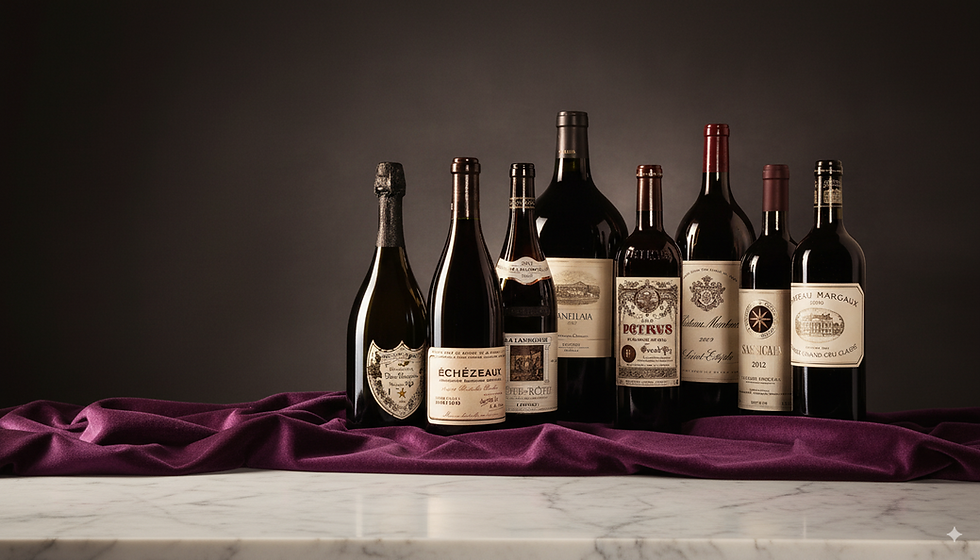
En Primeur Investing and Long-Term Wine Value
Updated: Oct 3
En primeur wine is one of the most discussed topics in fine wine circles, however, it is also one of the most misunderstood. Most wine investment companies promote buying en primeur wine as an exciting route into the finest vintages at the best prices. The honest answer is more nuanced than that, and if you are thinking about en primeur wine investment, it is worth understanding the full picture before you commit. If you are new to fine wine investment altogether, our fine wine investment guide is a useful starting point before reading this.

What Is En Primeur Wine?
En primeur wine meaning, in plain terms, is this: you buy wine before it has been bottled. The wine is still in barrel at the chateau or domaine, typically around six months after harvest. You agree on a price, pay upfront, and then wait. The wine is bottled and delivered, usually 18 to 24 months later. The practice originated in Bordeaux, which is why you will most often hear the phrase Bordeaux en primeur fine wine, but it has since expanded into other regions, including Burgundy.
What en primeur wine means for the buyer is that you are making a financial commitment based on barrel samples, early critic scores and the reputation of the producer. You will not receive the physical wine for the better part of two years. You are, in effect, buying wine futures.
The wine society en primeur campaigns and similar offerings from merchants allow collectors across the UK to buy en primeur wine by the case, often as en primeur wine mixed cases or single-appellation selections. Buying wine en primeur this way has historically been popular with collectors who want access to specific bottles that might otherwise be difficult to find once released.
How Buying En Primeur Wine Works
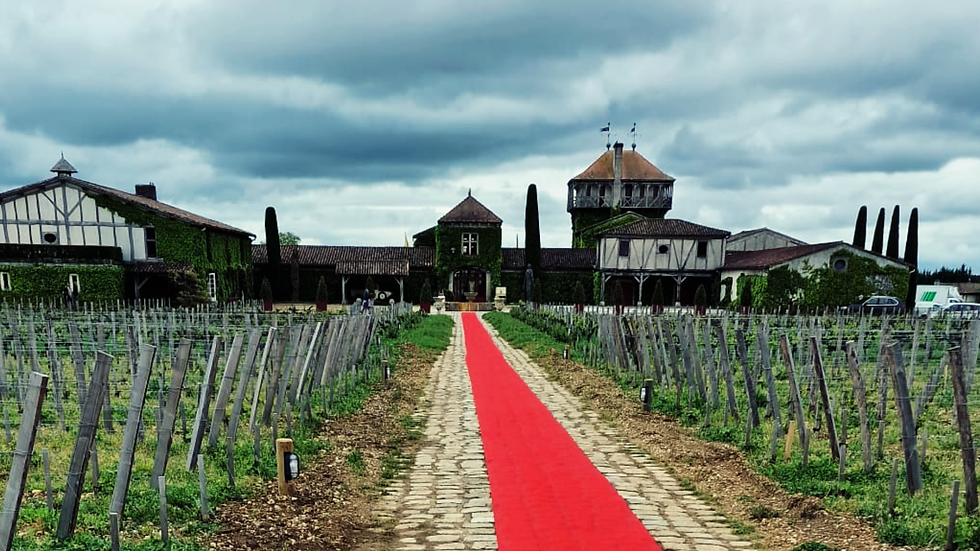
The process of how to buy wine en primeur runs through the negociant system in Bordeaux, or directly through trusted importers and allocations in Burgundy. A buyer approaches an en primeur wine distributor or importer, reviews the campaign offerings, and places an order at the en primeur wine price quoted. That price is locked in. The wine is then delivered to a bonded warehouse when ready, or shipped directly depending on the arrangement.
You can buy en primeur wine online through a number of UK merchants and platforms. The wine society en primeur bordeaux campaign is one of the most well-known routes for UK buyers, and there are specialist fine en primeur wine importers who offer access to smaller Burgundy producers. Buying burgundy en primeur wine, including burgundy en primeur wine mixed case options, has grown considerably in popularity over the past decade as Burgundy's investment profile has risen.
The en primeur wine 2022 campaign for Bordeaux was among the most heavily marketed in recent years, following what many critics called an exceptional vintage. The en primeur wine 2023 campaign followed with considerable interest. En primeur wine 2020 is now fully bottled and in circulation, and its performance on the secondary market has been watched closely by investors.
En Primeur vs Secondary Market Wine Investment
This is where the investment case becomes complicated. The traditional argument for investing in wine en primeur is simple: you buy early at a lower price, the wine appreciates as it releases and matures, and you sell on the secondary market at a profit. For several decades, that model worked reliably for the top Bordeaux chateaux. The Liv-ex Fine Wine 1000 index rose from 100 in 2003 to 366 by the end of 2025, and en primeur was a significant part of that story during the boom years.
But the picture has shifted. En primeur wine prices for the top Bordeaux releases have in many cases been set at or above secondary market levels. The chateaux and their negociants are sophisticated about pricing. They know what demand looks like, and they price accordingly. That means the discount that en primeur was traditionally supposed to offer has, in many cases, disappeared. For en primeur wine 2022, a significant number of buyers paid opening prices that the secondary market has not consistently exceeded.
The comparison between en primeur vs secondary market wine investment is therefore not as straightforward as it once was. On the secondary market, you can see what a wine is trading at right now, across multiple buyers and sellers, with full price transparency. With en primeur, you are making a bet on future demand, future critic reception of the bottled wine and future market conditions, and you are tying up capital for 18 to 24 months before you even hold the asset. You can explore how secondary market dynamics work in more detail in our article on the wine secondary market.
Is En Primeur Wine Worth It as a serious long-term Investment?
Buying wine en primeur is it worth it? For collectors who genuinely want specific bottles that will never be available again, and who are comfortable paying current market rates for early access, en primeur can make sense. There are still allocations, particularly from small Burgundy domaines, where buying burgundy en primeur wine is the only way to secure bottles that will not appear on the open market in sufficient quantity. For wines like that, the access argument holds.
For investors whose primary goal is return on capital, the case is much harder to make in the current climate. Is it worth buying wine en primeur as a pure investment strategy? In most cases, the honest answer is no. The price transparency of the secondary market, the ability to buy fully bottled and authenticated wine with an established track record, and the absence of a two-year waiting period with capital locked in all point toward the secondary market as the more rational entry point for serious wine investment.
This is not a popular view in a sector where en primeur campaigns generate significant revenue for merchants and distributors. But it is an honest one.

Should I Buy En Primeur Wine?
Should you buy en primeur wine? It depends entirely on what you are trying to achieve. If you are a collector who wants access to specific domaines in Burgundy or specific chateaux in Bordeaux, and you understand that access is the primary value rather than investment return, then buying en primeur wine by the case or as part of a mixed case programme can be a reasonable decision.
If you are investing in wine en primeur with an expectation of material financial return, you need to go in with your eyes open. The wines most commonly featured in en primeur campaigns are not the scarcest wines in the investment-grade universe. They are the most marketed. Scarcity, which is the single most powerful driver of fine wine investment returns over time, is not guaranteed by an en primeur release. Our Fine Wine Investment Calculator lets you compare holding period returns across different wine types, which is a useful exercise before committing to any single strategy.
The wines that have produced the strongest long-term investment returns, such as those covered in our article on Armand Rousseau and the legacy of Chambertin, are not typically the wines that generate the loudest en primeur campaigns. They are the wines that are genuinely scarce, genuinely in demand globally and genuinely difficult to access through standard retail channels.
Our Honest Position on En Primeur Wine Investment
Fine wine investment is not a simple asset class. En primeur wine investment is one of the more complex corners of it. The purchase of en primeur wine process is well established, the logistics are understood, and for the right buyer with the right objectives, it has a place. But it is not, in our view, the most reliable route to serious investment returns in the current fine wine market.
At Lafleur, we focus on investment-grade wine sourced through trusted networks, authenticated, stored in recognised bonded facilities and selected on the basis of scarcity, proven demand and long-term track record. That process sometimes includes wines that were originally bought en primeur by others and are now available on the secondary market at prices that reflect genuine market dynamics rather than campaign momentum. You can read more about how that process works and what a properly structured fine wine investment looks like in practice.
For where en primeur fits within a wider portfolio, see our Fine Wine Investment overview.
If you would like to have a direct conversation about whether en primeur wine, secondary market acquisition or a combination of both makes sense for your situation, book a private consultation and we will give you an honest perspective.